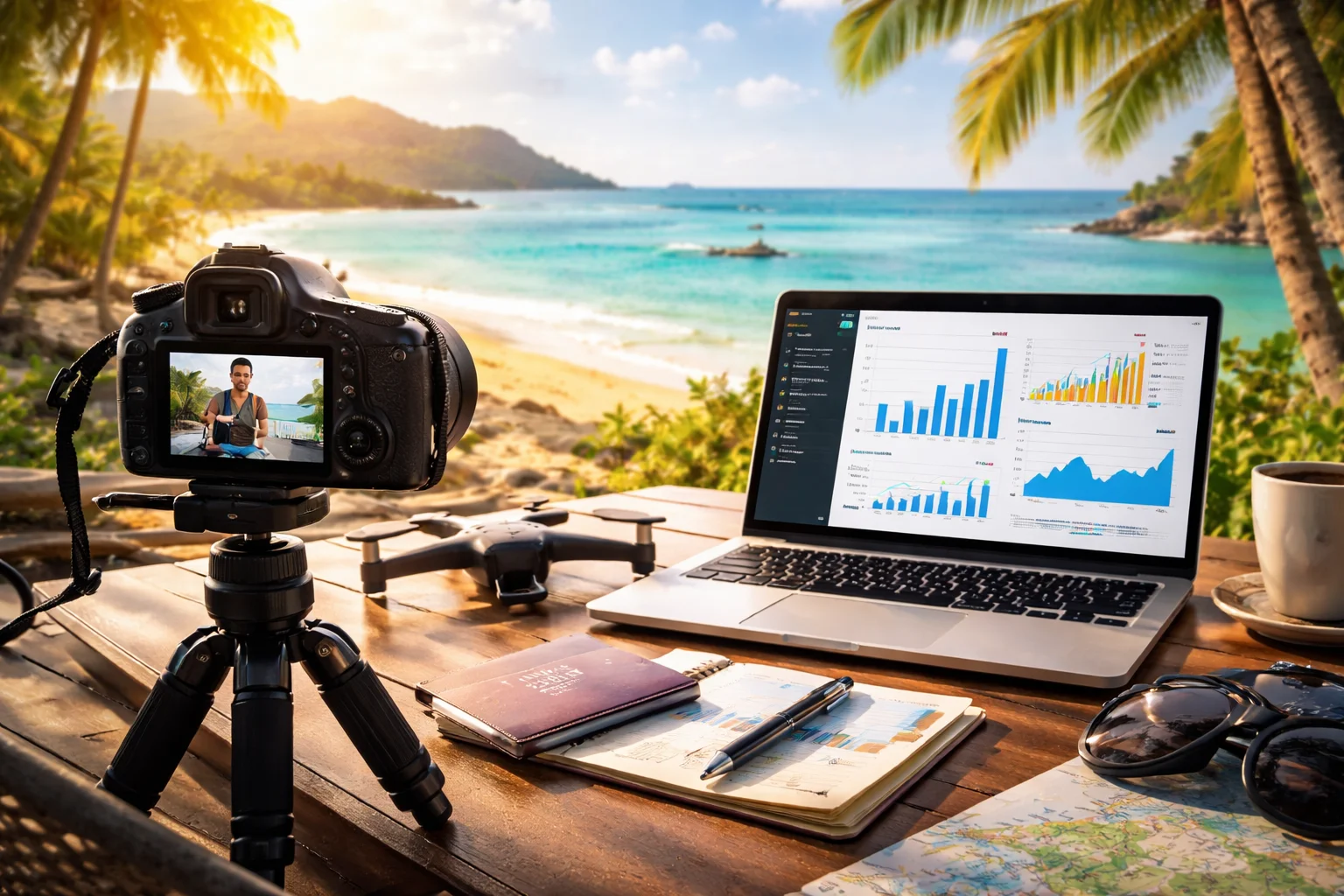
Travel vlogging looks exciting from the outside. Viewers see beautiful beaches, busy cities, mountain roads, and unique cultures. What many people do not see is the business system behind the camera. Travel creators do not earn income from one single source. They build multiple streams that work together. Some income comes directly from video platforms, while other revenue comes from partnerships, affiliate programs, digital products, and services.
Understanding how travel vloggers make money requires looking at the full picture. Revenue depends on audience size, engagement level, niche focus, and business strategy. A small channel earns differently from a large creator with millions of views. Income can change from month to month based on travel seasons, ad rates, and brand campaigns. Below is a complete breakdown of how this industry works in real terms.
The Core Income Sources of Travel Vloggers
Most successful travel creators rely on a combination of the following revenue categories:
- Advertising Revenue
- Brand Sponsorships
- Affiliate Marketing
- Digital Products
- Photography and Licensing
- Service-Based Income
- Platform Bonuses and Creator Funds
Each of these income types works differently. Together, they form a stable business model.
See also Stay Connected with travellingapples.com – Contact and Social Media Guide
Advertising Revenue from Video Platforms
The most common income source for travel vloggers is advertising revenue from platforms like YouTube. Ads appear before, during, or after videos. Creators earn based on views and ad performance.
How Ad Revenue Works
Advertisers pay platforms to show ads. The platform then shares part of that revenue with creators. Earnings are usually calculated using RPM (Revenue Per 1,000 views).
Travel content often attracts audiences interested in flights, hotels, insurance, and travel gear. Because these industries spend money on advertising, travel content can sometimes have moderate to high ad rates.
Realistic Income Examples
Income varies widely. Below are general estimates:
Small Channel (10,000–20,000 Subscribers)
- 100,000 monthly views
- $3–$8 RPM range
- Estimated ad income: $300–$800 per month
Mid-Level Channel (100,000 Subscribers)
- 500,000 monthly views
- $5–$12 RPM range
- Estimated ad income: $2,500–$6,000 per month
Large Channel (500,000+ Subscribers)
- 1,000,000+ monthly views
- Higher RPM depending on audience country
- Estimated ad income: $8,000–$20,000+ per month
These numbers are not fixed. They change depending on audience location, video length, and season.
Brand Sponsorships and Paid Partnerships
For many travel vloggers, sponsorships become the largest income source once their audience grows.
Brands pay creators to feature products or services inside their videos. In travel content, common sponsors include:
- Hotels and resorts
- Airlines
- Travel insurance companies
- Backpack and luggage brands
- Camera equipment companies
- Tourism boards
How Sponsorship Deals Work
A brand may pay for:
- A dedicated video
- A short segment inside a vlog
- Social media promotion
- Package deals across multiple platforms
Payment depends on:
- Subscriber count
- Average views per video
- Audience engagement
- Niche focus
- Audience country
Typical Sponsorship Pricing
Small Creator
- $200–$800 per integration
Mid-Level Creator
- $1,000–$5,000 per integration
Large Creator
- $10,000–$50,000+ per campaign
Tourism boards may also provide free flights, hotels, and guided tours in exchange for exposure. Sometimes these deals include both payment and sponsored travel.
Affiliate Marketing in Travel Content
Affiliate marketing is one of the most consistent revenue streams in travel vlogging. Creators place tracked links in video descriptions or websites. When viewers purchase through those links, the creator earns a commission.
Common affiliate categories include:
- Flight booking platforms
- Hotel booking sites
- Travel credit cards
- Travel insurance
- Camera gear
- Backpacks and travel accessories
Why Affiliate Income Works Well in Travel
Travel audiences often search for:
- Best luggage
- Travel camera setup
- Budget flights
- Hotel recommendations
If a viewer trusts the creator, they are more likely to book through the recommended link.
Affiliate income depends on:
- Conversion rate
- Product price
- Commission percentage
- Audience buying behavior
A mid-sized creator can earn anywhere from a few hundred to several thousand dollars per month from affiliate programs alone.
Selling Digital Products
Many travel vloggers expand beyond brand deals and ads by creating their own products. Digital products are powerful because they do not require inventory or shipping.
Examples include:
- Travel presets for photo editing
- Destination guides
- Travel planning templates
- Budget travel spreadsheets
- Online travel photography courses
If a creator sells a $30 digital guide and sells 500 copies, that equals $15,000 in revenue. Digital products can become a major income source once audience trust is strong.
Photography and Video Licensing
Travel creators often capture high-quality footage and images. These assets can generate additional income through licensing.
Common Licensing Channels
- Stock photo websites
- Stock video marketplaces
- Direct licensing to tourism companies
- Media agencies
A single drone shot of a famous location can be licensed multiple times. Over time, a strong content library becomes a valuable asset.
Merchandise and Personal Brand Products
Some travel vloggers build a personal brand strong enough to launch merchandise.
Examples include:
- Branded travel backpacks
- Clothing lines
- Travel journals
- Accessories
Merchandise works best for creators with highly loyal communities. It is less common for smaller channels but becomes effective at scale.
Service-Based Income
Experienced travel vloggers sometimes offer services related to their expertise.
Examples include:
- Travel consultation sessions
- Content creation for hotels
- Brand photography services
- Video production for tourism boards
- Social media management for travel brands
In these cases, the creator is not only an influencer but also a service provider.
Creator Funds and Short-Form Bonuses
Short-form platforms occasionally provide bonus payments to creators based on views and engagement. While not always stable, these programs can add extra income.
These earnings are usually smaller than sponsorships but can support overall monthly revenue.
The Role of Audience Location in Earnings
Audience country strongly affects income. Views from countries like the United States, Canada, United Kingdom, and Australia often generate higher ad rates compared to developing regions.
For example:
- 100,000 views from high-income countries may earn significantly more than the same number of views from lower-ad-rate regions.
This explains why two channels with similar view counts can earn very different amounts.
Travel Costs vs Revenue Reality
Revenue does not equal profit. Travel vlogging involves expenses that reduce actual earnings.
Common Costs
- Flights
- Accommodation
- Transportation
- Camera equipment
- Lenses and drones
- Editing software
- Music licensing
- Travel insurance
- Taxes
A creator earning $5,000 per month may spend $2,000–$3,000 on travel and production costs.
Understanding this difference is important. Some creators reinvest heavily into better content quality, which reduces short-term profit but improves channel growth.
Income Variability in Travel Vlogging
Travel income is rarely consistent. Several factors influence monthly earnings:
- Seasonal travel demand
- Advertising rate fluctuations
- Algorithm changes
- Global travel restrictions
- Brand marketing budgets
Peak tourist seasons often attract more brand campaigns. Economic slowdowns may reduce advertising budgets. Successful creators manage this variability by diversifying income streams.
Building a Sustainable Travel Vlogging Business
Travel vlogging becomes financially strong when creators combine multiple revenue streams.
A common structure for successful creators looks like this:
- Ad revenue provides base income
- Sponsorships provide major boosts
- Affiliate marketing adds consistent commissions
- Digital products increase margins
- Services create premium revenue
Instead of depending on one income source, diversification creates stability.
How Beginners Start Earning
New travel vloggers usually begin with:
- Affiliate links
- Small brand collaborations
- Ad revenue once monetization requirements are met
In early stages, earnings are often low. Many creators treat the first year as an investment period. Growth depends on consistent uploads, audience engagement, and niche clarity.
How Top Travel Vloggers Scale Income
Large creators expand beyond simple vlogs. They:
- Build teams for editing
- Develop strong brand identities
- Launch premium products
- Negotiate long-term sponsorship contracts
- Repurpose content across multiple platforms
At scale, a travel channel operates like a media company rather than a personal hobby.
Frequently Asked Questions
Do travel vloggers get free trips?
Yes. Many hotels, resorts, and tourism boards offer complimentary stays or experiences in exchange for exposure. However, not all trips are paid. Smaller creators often pay their own expenses.
How much do travel vloggers earn per month?
Income varies widely. A small channel may earn a few hundred dollars per month. A mid-level channel can earn several thousand. Large creators can generate tens of thousands monthly depending on deals and views.
Is ad revenue the main source of income?
For beginners, yes. For established creators, sponsorships and affiliate marketing often become more important than ads.
Can someone start travel vlogging without money?
It is possible, but travel costs make it challenging. Many creators begin by documenting local trips before expanding internationally.
Conclusion
Travel vlogging is not just about exploring new places. It is a structured digital business built on multiple income streams. Advertising revenue forms the foundation, but sponsorships, affiliate marketing, digital products, licensing, and services significantly increase total earnings.
Income depends on audience size, engagement quality, niche focus, and business planning. Some creators earn modest amounts while funding their travels. Others build full-scale media brands generating substantial revenue.
The key to understanding how travel vloggers make money is recognizing that successful creators treat their channel as a business, not just a hobby. Behind every scenic video lies strategy, partnerships, planning, and careful financial management.