
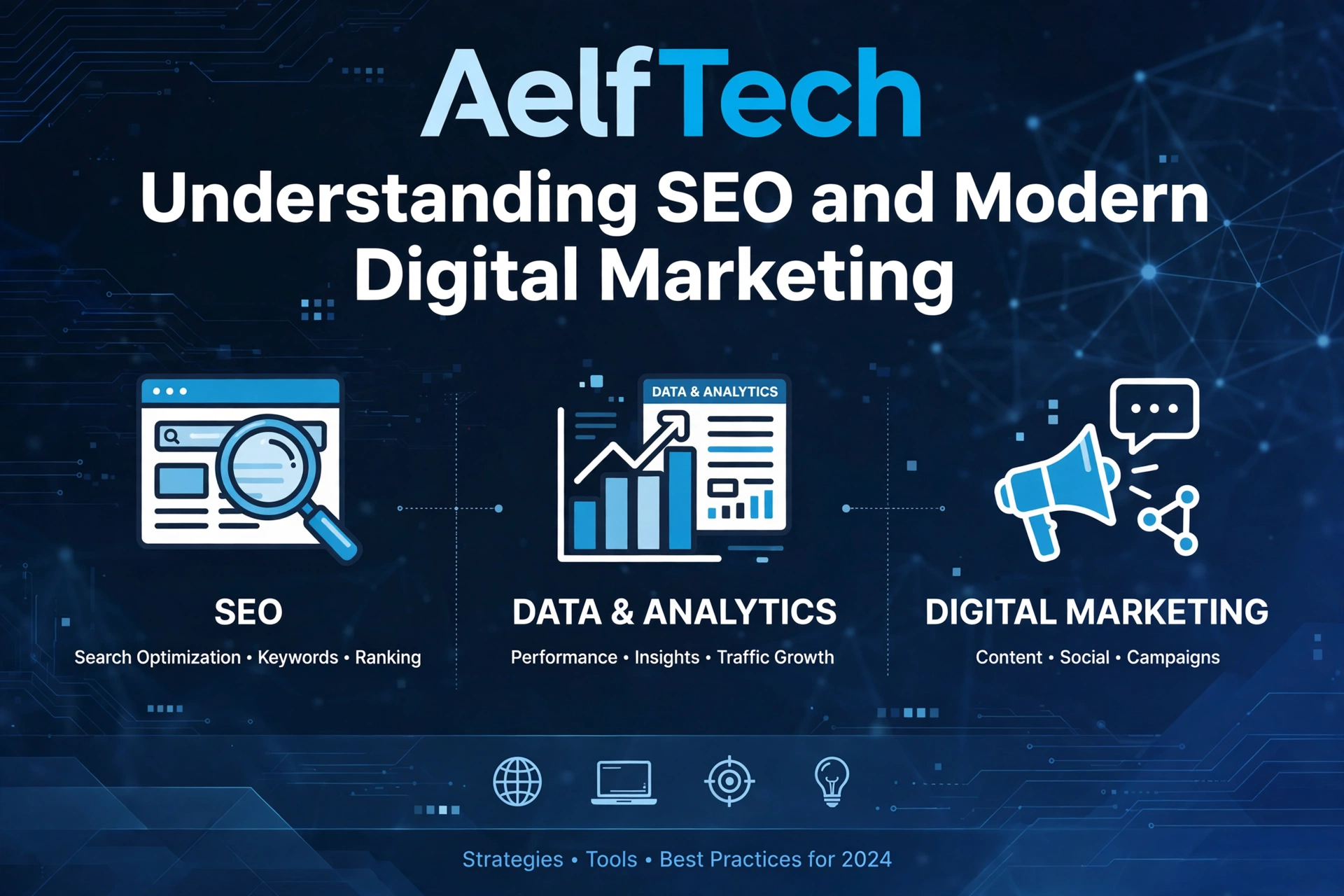
Introduction
Building a strong online presence requires more than creating a website and waiting for visitors to arrive. Businesses need to help people discover their services, provide useful information, and create experiences that encourage potential customers to take action. Search engine optimization (SEO), paid advertising, social media content, and website development all contribute to this process.
Digital marketing continues to evolve as search engines improve their systems, artificial intelligence becomes more accessible, and customer expectations change. Businesses that understand these developments can make better decisions about where to invest their time and resources.
AelfTech is a relevant starting point for exploring the relationship between technology, SEO, and digital marketing. Understanding these areas in simple terms can help business owners develop a more effective online strategy without getting lost in technical details.
What Is SEO and Why Does It Matter?
Search engine optimization is the process of improving a website so that its pages can be discovered and understood by search engines. It also involves making content useful to the people searching for information, products, or services.
When someone searches online for a particular service, search engines evaluate numerous signals to determine which pages are relevant and helpful. These signals can include the content of a page, its technical accessibility, the website’s reputation, and how well the page satisfies the searcher’s needs.
Effective SEO begins with understanding the target audience. A business should identify the questions customers ask, the problems they want to solve, and the terms they use when looking for solutions. This information helps shape website content that addresses real needs instead of simply repeating keywords.
Technical performance also matters. Pages should load reliably, work well on mobile devices, and provide clear navigation. Search engines must also be able to access important content.
SEO usually takes time, and rankings are never guaranteed. However, a consistent approach to content quality, technical improvements, and relevant website optimization can help businesses build sustainable organic visibility.
How Modern Digital Marketing Works
Digital marketing combines several channels to reach potential customers and encourage meaningful interactions. SEO helps businesses attract organic search traffic, while paid advertising can provide additional visibility for specific audiences and search terms.
Social media supports brand awareness, community engagement, and content distribution. Email marketing allows businesses to communicate directly with interested subscribers, while analytics tools help measure the results of different campaigns.
These channels work best when they support the same business goals. For example, a company offering professional services might publish helpful website articles, promote selected content through paid campaigns, and share practical advice on social media. Each activity serves a different purpose, but all contribute to a consistent online presence.
Businesses should avoid treating every channel as equally important. A local service provider may benefit more from local SEO and targeted search advertising than from investing heavily in every social network. The right mix depends on customer behavior, available resources, and the type of service being offered.
The Role of Artificial Intelligence in SEO
Artificial intelligence is changing how marketers research topics, organize information, and produce digital content. AI-assisted tools can help generate content outlines, identify related search questions, summarize research, and support keyword analysis.
These capabilities can reduce the time spent on repetitive tasks, allowing marketers to focus more on strategy and quality control. However, AI-generated content still requires careful review. An article may sound convincing while containing inaccurate details, generic advice, or information that does not meet the reader’s needs.
Search optimization should focus on providing genuine value rather than producing large quantities of similar pages. Original insights, clear explanations, firsthand experience, and accurate information can make content more useful and distinctive.
Search experiences are also evolving as AI-generated summaries and conversational search features become more common. Businesses should therefore aim to answer relevant questions clearly, organize information logically, and maintain technically accessible websites.
There is no single technique that guarantees visibility in every search experience. A strong foundation of helpful content, sound technical SEO, and a clear understanding of the audience remains a sensible long-term approach.
Why WordPress Optimization Matters
WordPress is widely used to build business websites, blogs, and online stores. Its flexibility makes it suitable for many projects, but a successful website still requires thoughtful configuration and maintenance.
Website owners should use a theme that supports their needs, limit unnecessary plugins, and keep WordPress core files, themes, and plugins updated. Regular backups and appropriate security measures can reduce the impact of technical problems.
Page speed is another important consideration. Large images, excessive scripts, and poorly configured plugins can slow down a website. Optimizing images, using suitable caching, and choosing reliable hosting can improve performance.
A clear website structure also helps visitors find information. Service pages should explain what a business offers, who it serves, and how customers can get in touch. Descriptive headings and straightforward navigation make content easier to understand.
These improvements support both user experience and SEO. However, technical optimization should not come at the expense of clarity. A fast website that fails to answer visitors’ questions is unlikely to perform well as a business resource.
Measuring Digital Marketing Performance
Digital marketing becomes more effective when businesses measure results rather than relying on assumptions. Website analytics can reveal which pages attract visitors, how people arrive at a website, and which content receives attention.
SEO reporting may include organic clicks, impressions, search queries, and changes in relevant rankings. Paid campaigns can be evaluated through advertising costs, conversions, and the value generated by customer inquiries or purchases.
Social media measurements should also reflect business objectives. Engagement can be useful, but likes and views do not always translate into leads or revenue.
The most meaningful metrics depend on the purpose of each campaign. A business seeking qualified inquiries should pay close attention to lead quality and conversion rates rather than focusing exclusively on traffic.
Regular reviews help identify what is working and where adjustments are needed. This approach allows businesses to improve their strategies gradually instead of making major changes based on short-term fluctuations.
Exploring Digital Growth With AelfTech
Understanding digital marketing does not require mastering every tool or trend. It starts with identifying business priorities and choosing practical methods to reach the right audience.
Readers interested in SEO, paid media, social content, and WordPress can visit aelf techs to explore the website and its digital focus. Learning about these subjects can help business owners understand how different marketing activities contribute to online visibility.
Digital growth also involves broader questions about how people discover information, make decisions, and interact with online content. Exploring topics such as betterthisworlding can provide an additional perspective on digital content and ideas found across the internet.
The important step is to evaluate information carefully and apply useful lessons to specific business goals. Every business has different customers, competition, and resource limitations, so strategies should be adapted rather than copied without consideration.
Conclusion
SEO and modern digital marketing work together to help businesses become more visible, communicate effectively, and attract relevant customers. Organic search, paid advertising, social media, and website optimization each provide different opportunities, but their value depends on how well they support the overall business strategy.
Artificial intelligence can make certain tasks more efficient, while analytics helps marketers understand performance and identify areas for improvement. Nevertheless, accuracy, useful content, technical reliability, and customer needs remain central to successful digital marketing.
By taking a practical approach and making decisions based on clear objectives, businesses can develop a stronger online presence over time. AelfTech provides a starting point for exploring these concepts and understanding how technology and marketing can work together in the changing digital landscape.

